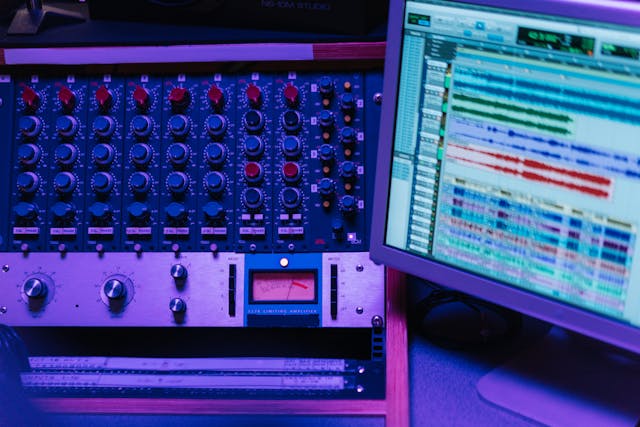
In the digital age, audio compression plays a crucial role in how we record, produce, transmit, and listen to sound. Whether you’re streaming a song on Spotify, sharing a podcast, or mastering a studio track, compression is at work behind the scenes — shaping the balance, clarity, and even the size of your audio files.
However, “audio compression” can mean two very different things depending on the context. In one sense, it refers to dynamic range compression — a process used during mixing and mastering to balance volume levels. In another, it means data compression, which reduces file size for storage or transmission.
This article explores both forms of compression — how they work, why they’re essential, and how to manage them effectively, especially when preparing or converting audio formats using tools like WAVconverter.com.
1. Understanding Audio Compression: Two Different Meanings
Before diving deeper, it’s important to distinguish between the two main types of compression:
-
Dynamic Range Compression (Signal Compression)
This affects the volume dynamics of an audio signal — reducing the difference between loud and quiet sounds to make the overall output more consistent. It’s a creative and technical tool used during mixing and mastering. -
Data Compression (File Compression)
This affects the file size of audio recordings — removing or reducing digital information to make files smaller and easier to store or share. It’s the basis for formats like MP3, AAC, and OGG, as opposed to uncompressed formats like WAV or AIFF.
Both are essential to modern audio workflows, though for entirely different reasons.
2. Dynamic Range Compression: Balancing Sound
What Is Dynamic Range?
The dynamic range of audio refers to the difference between the quietest and loudest parts of a recording. For example, in a live orchestra, a whisper-quiet violin passage might measure -60 dB, while a crashing cymbal might reach +0 dB — a very wide range.
In contrast, pop music or podcasts often have a much narrower dynamic range, allowing all elements to be clearly audible even in noisy environments.
How Dynamic Range Compression Works
A compressor automatically reduces the volume of loud sounds that exceed a certain threshold while leaving quieter sounds unaffected (or sometimes boosting them slightly). This process smooths out volume fluctuations, making a track sound more even, polished, and professional.
The key parameters of a compressor include:
-
Threshold: The level above which compression begins.
-
Ratio: How much the volume is reduced once it exceeds the threshold (e.g., a 4:1 ratio means that for every 4 dB over the threshold, only 1 dB is output).
-
Attack: How quickly the compressor responds after the sound crosses the threshold.
-
Release: How long the compressor takes to stop compressing after the sound drops below the threshold.
-
Make-Up Gain: Boosts the overall level to compensate for the reduction in volume caused by compression.
Why It’s Important
Dynamic compression ensures consistent loudness, improves clarity, and helps different elements in a mix sit together naturally. It’s indispensable for:
-
Vocals that vary in intensity
-
Drum tracks that spike in volume
-
Podcasts where voices differ in loudness
-
Broadcast or streaming audio where consistency is crucial
Creative Uses of Compression
Beyond control, compression is also an artistic tool. Producers use it to shape tone and character. For example, heavy compression on drums creates punch and presence; subtle compression on vocals adds warmth and intimacy.
Some compressors, like the LA-2A or 1176, are famous for their unique analog “color,” emulated in digital plugins within DAWs.
3. Data Compression: Shrinking File Size Without Ruining Sound
While dynamic compression changes the sound, data compression changes the file. This form of compression is critical for sharing and streaming music efficiently without overwhelming storage or bandwidth.
Uncompressed Audio
Formats like WAV and AIFF store sound in raw, unaltered PCM data. This means every bit of audio is preserved — ideal for professional use but resulting in large files. For instance, a 3-minute stereo WAV file at CD quality (16-bit, 44.1 kHz) can easily exceed 30 MB.
Lossless Compression
Lossless formats, such as FLAC (Free Lossless Audio Codec) and ALAC (Apple Lossless Audio Codec), reduce file size without discarding any audio information. They use algorithms to compress data more efficiently — much like a ZIP file — but can be decompressed back to the original waveform perfectly.
Lossless compression typically reduces file size by 30–60%, offering an ideal balance between quality and efficiency.
Lossy Compression
Lossy formats like MP3, AAC, and OGG Vorbis achieve far smaller file sizes by permanently removing parts of the audio signal considered less perceptible to human hearing. This process relies on psychoacoustic models, which predict what information listeners are unlikely to notice missing.
For example:
-
An MP3 encoded at 128 kbps is roughly 1/10th the size of a WAV file but sacrifices some fidelity.
-
Higher bitrates (e.g., 320 kbps) offer near-transparent quality that’s indistinguishable to most listeners.
Lossy compression is ideal for:
-
Streaming platforms (Spotify, YouTube, Apple Music)
-
Portable devices with limited storage
-
Sharing demos or previews quickly
When working with uncompressed studio recordings, you can use WAVconverter.com to convert large WAVs to MP3 or FLAC efficiently, maintaining the best possible sound quality for your needs.
4. The Balance Between Quality and Efficiency
Choosing the right compression type depends on your goals.
-
Studio Production: Always record and mix in uncompressed formats (WAV/AIFF) to maintain full quality during editing and mastering.
-
Distribution and Streaming: Convert to lossy or lossless compressed formats depending on your platform or audience needs.
-
Archiving: Use FLAC for long-term storage — perfect quality with reduced space.
By understanding how compression affects both sound and size, you can make intelligent decisions for every stage of your workflow.
5. Loudness, Normalization, and the “Loudness Wars”
Compression is also at the center of an industry-wide debate known as the Loudness Wars — the trend of using excessive compression to make songs sound louder.
In theory, louder tracks grab attention. But when overdone, compression reduces dynamic contrast, flattens emotion, and causes listener fatigue.
Modern streaming platforms like Spotify and Apple Music now apply loudness normalization, automatically reducing playback volume of overly compressed tracks. This encourages producers to preserve natural dynamics instead of pushing for maximum loudness.
The key takeaway: compression should enhance, not dominate, your sound.
6. How to Use Compression Wisely
A few best practices can help ensure compression improves your mix rather than harms it:
-
Use Gentle Settings: Subtle compression often sounds more natural.
-
Compress in Stages: Apply light compression on individual tracks and another on the full mix (“bus compression”) for cohesion.
-
Listen, Don’t Just Look: Visual meters can mislead — rely on your ears.
-
A/B Testing: Always compare compressed vs. uncompressed versions.
-
Avoid Overcompression: Preserve headroom and natural transients; they add life to your mix.
7. Audio Compression in Modern Applications
Compression extends beyond the studio:
-
Broadcasting: Ensures consistent volume for radio and TV.
-
Streaming: Balances sound between different devices and speakers.
-
Gaming: Keeps sound effects controlled without overwhelming dialogue.
-
Podcasting: Levels voice volume across different speakers for clarity.
Even consumer devices like smartphones and smart TVs use real-time compression algorithms to adapt audio dynamically for different environments.
8. File Conversion and Compression with WAVconverter.com
When working with digital audio, you’ll often need to convert between file types — for instance, exporting a WAV from your DAW, then converting it to MP3 or FLAC for online use.
That’s where WAVconverter.com becomes invaluable. It allows users to:
-
Convert large, uncompressed WAV files into smaller formats (like MP3, FLAC, or AAC)
-
Maintain the highest possible sound quality
-
Save time when preparing files for streaming, clients, or uploads
WAVconverter.com bridges the gap between professional production and real-world distribution — ensuring your sound stays clear, balanced, and ready for any platform.
9. The Future of Audio Compression
As internet speeds increase and storage becomes cheaper, one might think compression would become obsolete. Yet, it remains essential.
Newer codecs like Opus and MPEG-H achieve remarkable efficiency — delivering high-fidelity sound at lower bitrates. Meanwhile, machine learning and AI-driven compression are beginning to intelligently optimize sound quality based on content and playback environment.
Even as technology evolves, the goal stays the same: making great sound accessible everywhere, without unnecessary trade-offs.
Conclusion
Audio compression — whether controlling volume or reducing file size — is one of the most powerful tools in sound engineering. It shapes how we perceive music, communicate through voice, and share audio globally.
From smooth, controlled mixes to lightweight, portable files, compression ensures audio sounds its best in every context.
And when you’re ready to deliver that sound — whether as a pristine WAV master or a compact MP3 for streaming — WAVconverter.com gives you the flexibility to convert, prepare, and share your audio with professional precision.